Bowls in the Heartland: How Ramen Found a Home in the Last Places Anyone Expected
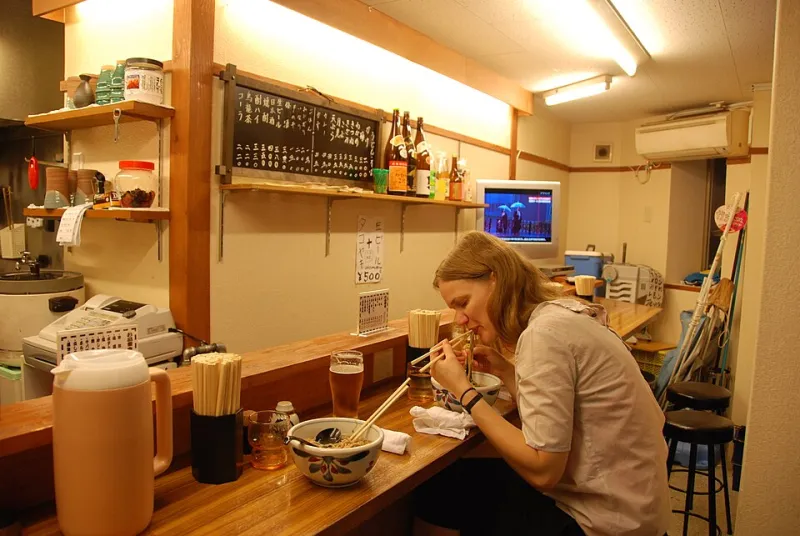
Photo: Maarten Heerlien from Voorschoten, The Netherlands, CC BY 2.0, via Wikimedia Commons
There's a ramen shop in a small city in rural Oklahoma where the line wraps around the block on Friday nights. The parking lot is full of pickup trucks. The walls are bare concrete. The broth has been simmering since before dawn. And the guy behind the counter — a third-generation Oklahoman who learned to cook from his Japanese-American grandmother — can barely keep up with demand.
This isn't supposed to be a ramen story. And yet, here we are.
The Unexpected Geography of the Bowl
For years, the cultural map of American ramen looked pretty predictable. New York, Los Angeles, Seattle, Chicago — cities with dense immigrant populations, adventurous food media, and a dining culture that rewards novelty. But somewhere in the last five or six years, something shifted. Ramen shops started appearing in places the food press wasn't watching: mid-sized cities in Texas, college towns in the Deep South, small towns in the Mountain West, farming communities in the Midwest.
And not as novelties. As institutions.
Chef Marcus Tillman opened his shop, Tanuki Bowl, in a town of about 30,000 in central Missouri three years ago. He expected skepticism. He got a full house on opening weekend and a waitlist that's never really gone away.
"People kept telling me the market wasn't there," he says. "That this was a steak-and-potatoes town, that nobody would pay $16 for a bowl of noodles. And then I opened, and I couldn't make enough broth to keep up."
What he found — and what a growing number of chefs in similar situations are reporting — is that the appetite for ramen isn't really about geography or politics. It's about something older and more universal than any of that.
Comfort Is Comfort, Wherever You Are
Ramen, at its core, is comfort food. Rich, warming, deeply savory, filling in a way that goes beyond just calories — it hits the same emotional register as a bowl of chili, a plate of biscuits and gravy, or a slow-smoked brisket. It's food that feels like someone took their time for you.
That's not a coastal thing. That's a human thing.
"My regulars aren't here because ramen is trendy," says chef Yuki Harmon, who runs a small shop in a rural Georgia town where she grew up. "They're here because after a long day, they want something that feels like it was made with care. That's what ramen is. That's always what it's been."
Harmon, who trained in Fukuoka before coming home to open her own place, says the transition wasn't as jarring as she anticipated. Yes, she had to introduce some customers to the concept of a tonkotsu broth. Yes, she got questions about whether the noodles were gluten-free. But the fundamental appeal — a hot, deeply flavored bowl you could wrap both hands around — needed no translation.
The Ritual Factor
There's another piece of this that chefs keep coming back to: the ritual.
In a country that's increasingly fractured and overstimulated, the experience of sitting down with a bowl of ramen — watching the steam rise, layering your toppings, taking that first slow sip of broth — feels almost meditative. There's a reason ramen shops, even the casual ones, tend to feel like a small escape from whatever's happening outside.
In conservative, rural communities where life can already move slower and where sit-down meals together still carry real social weight, that ritual resonates deeply.
"We don't have a lot of 'experience dining' here," says a regular at Tanuki Bowl who asked to stay anonymous. "There's no fancy tasting menu place, no wine bar scene. So when somewhere like this opens up, where the food is genuinely interesting and the experience feels intentional, people notice. People come back."
That sense of intentionality — the long-cooked broth, the handmade noodles, the careful assembly — communicates something to customers even if they've never thought about ramen before. It says: this was worth doing right.
The Meat Culture Connection
Here's something that might surprise you: ramen's deep ties to pork and beef have actually helped it land in meat-centric communities.
A bowl of tonkotsu is, fundamentally, a celebration of pork. Chashu is slow-braised belly. Tare can be built on chicken bones or beef marrow. The whole architecture of a great ramen is often a monument to animal protein done with extreme care and patience.
In communities where barbecue culture is strong, where people understand what it means to tend a fire for 14 hours, the philosophy behind a 20-hour tonkotsu broth isn't strange at all. It's familiar. It's just wearing different clothes.
"I had a guy come in who runs a barbecue competition team," says Harmon. "He sat down, had the broth, and just looked at me and said, 'You let this go all night, didn't you.' Like he recognized the process. That was one of my favorite moments."
The Chefs Who Took the Bet
Opening any restaurant is a risk. Opening a ramen shop in a town that's never had one — where you're not just selling a dish but explaining an entire culinary tradition — is a particular kind of leap.
The chefs doing it tend to share a few traits: deep personal connections to ramen (often through family or formative travel), a willingness to educate without being condescending, and a genuine love for the communities they're serving.
They're also, almost universally, locally rooted. Harmon grew up in Georgia. Tillman is from Missouri. The chef behind that Oklahoma shop was born and raised there. These aren't outsiders parachuting in with a concept. They're neighbors who happen to make extraordinary broth.
That matters more than it might seem. Trust is built differently in smaller communities. When a local opens a place and puts their name on it, people give it a real shot.
What It Means for the Bowl
The spread of ramen into unexpected American corners isn't just a business story. It's a cultural one.
Food has always been one of the quietest, most effective forms of cross-cultural exchange. You don't have to agree on anything to share a bowl. You don't have to have the same politics, the same background, the same set of cultural references. You just have to be hungry, and willing to try something made with care.
Ramen, with its layered history — Japanese roots, Chinese influences, post-war reinvention, global diaspora — has always been a food that traveled. It's always found new homes and adapted without losing its soul.
The heartland is just its newest territory. And from what the line outside Tanuki Bowl on a Friday night suggests, it's settling in just fine.