Gone by Friday: The Secret Power of the Bowl You Can't Always Have
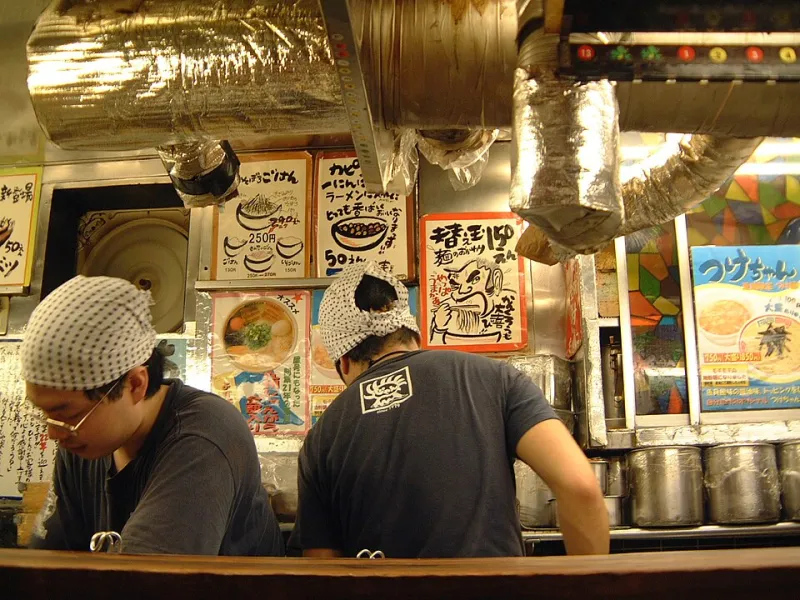
Photo: Marufish from Alor Setar, Malaysia, CC BY-SA 2.0, via Wikimedia Commons
Somewhere in Chicago, a line forms on a Tuesday morning. Not for a concert. Not for sneakers. For a bowl of ramen that won't exist by the weekend.
The shop posted about it Sunday night — a short-run kabocha squash shio broth, available Wednesday through Saturday or until it sells out, whichever comes first. By Monday, the comments were full of people tagging their friends, rearranging lunch plans, and doing the kind of quiet calendar math that most people reserve for concert tickets or flight deals. By Wednesday, it was gone by noon.
This is the limited-time ramen effect. And once you understand how it works, you'll never look at a rotating specials board the same way again.
Scarcity Does Something to the Brain
Food psychologists have spent years studying why humans assign more value to things they might not be able to have. The short answer: our brains treat scarcity as a signal of quality. If something is rare, we assume it must be worth chasing.
But limited-time ramen goes further than that. Unlike a flash sale or a seasonal latte, a specialty bowl from a serious noodle shop carries the weight of real craft. The broth took days. The toppings were sourced specifically. The chef made a decision — a creative, deliberate one — and that decision has an expiration date.
That combination of skill and impermanence creates something that feels almost closer to performance art than restaurant food. You're not just eating dinner. You're catching a show that won't run again.
"When I tell people a broth is gone, I mean it's actually gone," says one ramen shop owner in Portland who runs a rotating weekend special alongside his permanent menu. "I'm not holding anything back. When the last bowl goes out, that's it. People know that. And I think they feel it in the bowl somehow."
The Regular Menu Is Comfort. The Special Is an Event.
Every serious ramen shop has a core menu — the bowls that anchor the experience, the tonkotsu or the shoyu that regulars order by memory. Those bowls matter enormously. They're the backbone of the business and the foundation of the shop's identity.
But the limited-time offering does something the regular menu can't: it creates urgency.
A devoted customer might visit a favorite shop once or twice a month under normal circumstances. Introduce a rotating special that runs for five days? Suddenly that customer is back twice in a single week, bringing someone new each time, posting about it, texting the link to their group chat.
"The special is almost like a new reason to exist," explains a menu consultant who has worked with independent noodle shops across the Pacific Northwest. "Your regulars already love you. The limited bowl gives them a reason to act on that love right now instead of someday."
That urgency converts casual fans into something closer to evangelists. They become the people who spread the word, who feel personally invested in whether their friends make it in before the bowl disappears. There's a social currency in being the one who knew about it first, who got there in time, who can describe exactly what the broth tasted like.
What the Chef Gets Out of It
For the people behind the stove, limited-run bowls aren't just a business strategy — they're creative oxygen.
Ramen chefs who've spent years perfecting a single broth often describe the permanent menu as both a source of pride and a kind of pressure. Every bowl has to be exactly right, every time. That consistency is the job. But it can also calcify into routine.
The special is where experimentation lives. A winter citrus tare. A smoked dashi that took three weeks to dial in. A collaboration with a local farm that yielded exactly enough heritage pork for one weekend's worth of bowls. These projects give chefs a laboratory inside their own kitchens — a place to push ideas that the regular menu can't accommodate.
"I probably learned more from six months of weekend specials than I did from the two years before that," says a ramen chef in Los Angeles who started running Friday-only limited bowls after the pandemic. "You're solving new problems every time. And you're getting immediate feedback. Customers aren't polite about a bowl they waited an hour for."
That feedback loop — fast, honest, high-stakes — accelerates skill development in ways that repetition alone can't match.
The Fan Side of the Equation
Ask devoted ramen fans about their relationship with limited bowls and the language they use is telling. They talk about missing a special the way they'd talk about missing a flight. They describe getting there in time like it was a close call. A few have admitted to checking shop Instagram accounts the way others check sports scores — habitually, almost anxiously, looking for that next announcement.
This isn't irrational behavior. It's what genuine investment looks like.
Limited bowls give fans a reason to pay close attention to a shop's creative direction. They start to notice patterns — which seasons bring which flavors, which collaborations tend to show up, how the chef's palate seems to be evolving. Over time, following a shop's specials starts to feel less like tracking a restaurant and more like following an artist.
"I've been going to the same place for three years," says one regular at a Seattle ramen counter. "I know the permanent menu by heart. But the specials are why I'm still excited about it. Every few weeks there's something I've never tasted before, and it came from a kitchen I already trust. That's a pretty great deal."
Why This Model Works Especially Well Right Now
American diners in 2024 are simultaneously more food-literate and more experience-hungry than any previous generation. They've watched enough cooking content to understand what craft looks like. They've eaten widely enough to recognize when something is genuinely different. And they're actively looking for reasons to feel connected to the places they spend their money.
Limited ramen bowls satisfy all three of those appetites at once. They reward knowledge — you have to be paying attention to know they exist. They deliver on craft — the scarcity only means something if the bowl is actually worth the effort. And they create community — around the shop, around the chef, around the shared experience of having been there.
For ramen shops trying to build something more than a transaction with their customers, the limited bowl might be the most effective tool available. It doesn't require a bigger space or a larger staff. It requires creativity, communication, and the discipline to actually stop when the broth runs out.
The bowl that disappears is the one people remember longest. There's a lesson in that, somewhere between the psychology textbook and the soup pot.
When the shop posts again Sunday night, you'll know what to do.