Your Brain on Broth at Midnight: The Real Reason Late-Night Ramen Hits So Hard
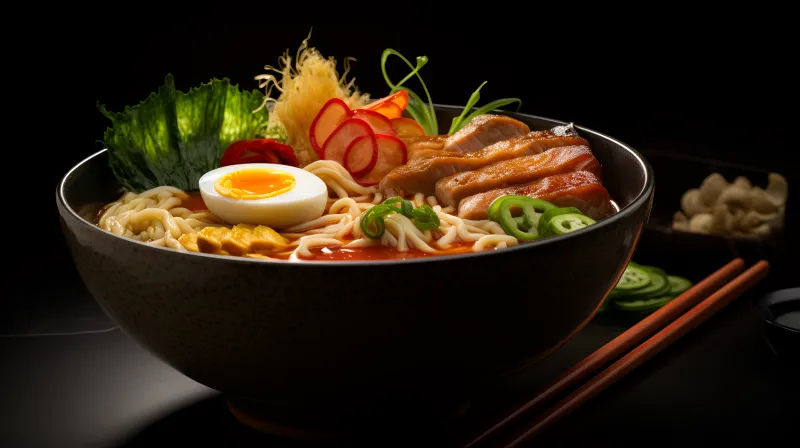
Photo: ramen bowl steaming at night dark moody restaurant lighting, via images5.alphacoders.com
You know the feeling. It's past midnight. You're not even that hungry — or at least you weren't, until someone mentioned ramen. Suddenly nothing else will do. Not a sandwich. Not leftovers. Specifically, a bowl of hot noodles in rich, savory broth, eaten at a counter somewhere with low lighting and no small talk required.
This isn't a coincidence or a lack of willpower. There's actual biology behind why ramen becomes almost magnetic at late hours, and understanding it makes the whole experience feel slightly less like a guilty pleasure and a lot more like a completely reasonable life choice.
What Your Brain Is Actually Doing After Dark
Late at night, your body's relationship with food shifts in a few measurable ways. Circadian rhythms affect everything from hormone production to how your digestive system processes nutrients — and one of the more interesting effects is how your brain responds to umami.
Umami — that deep, savory satisfaction that defines a good ramen broth — is registered by specific taste receptors that trigger glutamate responses in the brain. Research from the Monell Chemical Senses Center has shown that the brain's reward circuitry can become more sensitive to savory, high-sodium flavors during periods of fatigue and low blood sugar, both of which are common late at night. Your dopamine system, already a little depleted from a long day, is primed to respond strongly to exactly the kind of flavor profile a well-made ramen delivers.
There's also the warmth factor. Hot liquids consumed late at night have a measurable calming effect, partly through the physical sensation of warmth and partly because the act of eating something comforting triggers a mild serotonin response. Ramen is, neurologically speaking, pretty close to a perfect late-night food.
The Sodium Question (It's Not What You Think)
Ramen has a reputation for being high in sodium, and that reputation isn't entirely wrong. But late at night, that sodium hit serves a specific physiological purpose. When you're tired and your cortisol levels are dropping toward their overnight low, your body's sodium regulation shifts slightly — and a moderate sodium intake can actually help stabilize blood pressure and reduce the light-headed, low-energy feeling that comes with late-night fatigue.
This doesn't mean ramen is health food. It means your body at midnight is genuinely asking for something that ramen is genuinely good at providing. The craving is real and it's not arbitrary.
The fat and protein content matters too. A tonkotsu or tori paitan broth delivers a significant fat load that slows gastric emptying, meaning you feel full and satisfied in a sustained way rather than spiking and crashing. After a long night, that kind of slow-burn satiation is exactly what the body wants.
How Japan Built a Whole Culture Around This
Japan figured this out decades ago, which is why late-night ramen culture there is less of a niche thing and more of a social institution. The yatai — portable food stalls that set up in cities like Fukuoka after dark — have been serving workers, drinkers, and night owls for generations. The post-bar ramen run is so embedded in Japanese urban culture that it has its own vocabulary. Shime ramen, the "finishing ramen" eaten as a capstone to a night out, is practically a ritual.
The appeal isn't just physiological. Ramen shops in Japan lean into the late-night atmosphere deliberately — counter seating that doesn't require social performance, bowls that arrive fast and eat even faster, a kind of democratic warmth that asks nothing of you except that you show up and eat. It's a specific kind of hospitality that fits the 2 AM version of yourself perfectly.
Where to Find It in the US Right Now
America's late-night ramen scene is patchy but genuinely exciting in the cities where it exists. Here's where to actually go.
Los Angeles remains the country's strongest market for nocturnal noodles. Daikokuya in Little Tokyo has been a late-night anchor for years, serving rich tonkotsu-shoyu until the small hours. The city's density of Japanese-American restaurants means genuine options exist across the basin well past midnight on weekends.
New York City has Totto Ramen in Hell's Kitchen, which keeps late hours and consistently delivers on its chicken-based broths. The East Village and St. Marks area remain hunting grounds for late-night bowls, with a handful of spots that understand exactly who their midnight customer is.
Seattle punches above its weight here. The city's combination of a strong Japanese-American food culture and a population of night-shift workers, service industry folks, and chronic night owls has created genuine demand. Several spots in Capitol Hill and the International District extend their hours on weekends specifically for the post-bar crowd.
Chicago is an underrated late-night ramen city. Strings Ramen in Wicker Park has built a following partly on the strength of its hours and partly on bowls that hold up to scrutiny even when you're eating them at 1:30 AM with questionable judgment about most things.
Las Vegas, predictably, has the infrastructure even if the soul is sometimes missing. The noodle options in and around the Strip that run 24 hours are worth knowing about if you find yourself there, though the city's best ramen tends to be off-Strip and slightly harder to find at 3 AM.
The Bowl That Waits for You
There's something almost philosophical about the way ramen fits the late-night hour. It requires patience to make properly — hours of simmering, careful seasoning, the kind of slow attention that daylight kitchens specialize in. But it rewards impatience at the table. You sit down. The bowl arrives. You eat.
Your brain, running on fumes and craving exactly what ramen delivers, gets what it came for. The warmth hits first, then the umami, then the fat and protein doing their quiet work. By the time you're done, you feel like a person again.
That's not an accident. That's a bowl that was built for exactly this moment.
Menya Mugen tracks the best ramen hours across the country — check our location guides before your next late-night run.