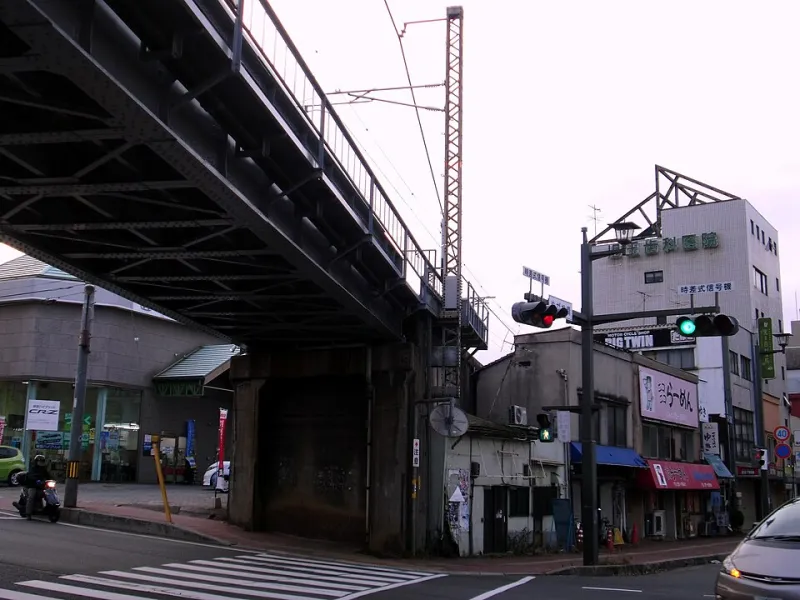
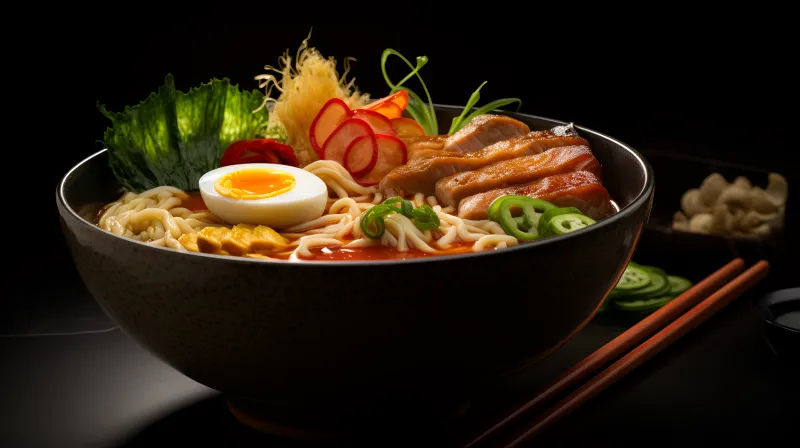
Left Coast, New Broth: How West Coast Ramen Chefs Are Rewriting the Rules Without Losing the Soul
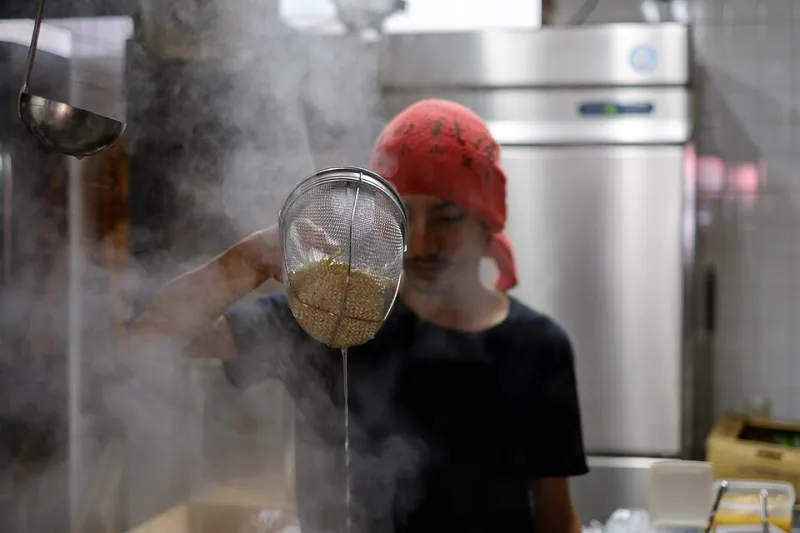
Photo: Andrea Belvedere from Tokyo, Japan, CC BY 2.0, via Wikimedia Commons
For a long time, the loudest voices in American ramen culture belonged to the purists. Authenticity was the whole conversation — which regional style was most faithfully reproduced, whose tonkotsu was closest to Fukuoka, whose shoyu broth tasted like it came straight out of a Tokyo back alley. And honestly? That conversation produced some incredible bowls.
But something else has been quietly building along the West Coast, in the kind of restaurants that don't always make the listicles. Chefs who trained in Japan, or who spent years obsessing over Japanese technique, started asking a different question: What if the most honest thing we can do is cook where we actually are?
The answers they've come up with are worth a road trip.
The Philosophy Shift Nobody Announced
There's no manifesto. No collective with a catchy name. What connects these chefs is more like a shared instinct — a belief that Japanese ramen's greatest strength was never its rigidity. It was always its willingness to absorb, adapt, and reflect the place and people making it.
"Ramen itself is a borrowed form," says Chef Kenji Watanabe, who runs a small shop in Portland's inner east side. "The Japanese took Chinese noodle traditions and made something completely their own over generations. I think about that a lot. We're not betraying the tradition by doing the same thing here. We're continuing it."
Watanabe's current menu features a dashi built from Oregon Dungeness crab shells and kombu sourced from the Pacific Northwest coast — a broth that's unmistakably Japanese in its restraint and clarity, but tastes like the Oregon coast in a bowl. It sells out most nights by 8 PM.
Seattle: Where the Pacific Rim Gets Literal
Seattle has geography working in its favor. The city sits at the intersection of Japanese-American culinary history, a thriving fishing industry, and a produce culture that borders on religious. Chef Mara Ishida at her Capitol Hill counter-service spot has leaned all the way into that overlap.
Her signature broth starts with a long-cooked chicken base — classic tori paitan territory — but gets layered with smoked salmon bones from a local fishmonger and finished with a miso tare that incorporates Washington State barley. The result reads as deeply umami and faintly smoky, with a richness that feels earned rather than engineered.
"People come in expecting something they recognize and leave having experienced something they can't quite place," Ishida says. "That gap — that slight confusion followed by pleasure — is exactly what I'm going for."
She's careful to note that the technique is Japanese through and through. The discipline of the tare system, the attention to noodle hydration, the obsessive broth timing — none of that changes. What changes is what goes into the pot.
Los Angeles: Sun, Soil, and the Farmers Market Broth
LA's ramen scene has always been one of America's most competitive, partly because of its large Japanese-American community and partly because LA diners are, bluntly, demanding. But even here, a new wave is finding room.
Chef David Reyes — who spent two years staging at ramen shops in Tokyo before returning to his hometown — opened a small spot in Culver City that sources almost entirely from the Santa Monica Farmers Market. His vegetarian shio ramen uses a broth built from heirloom tomatoes, dried citrus peel, and konbu, with a clarity and brightness that stops people mid-bite.
"Shio is the hardest style to hide behind," Reyes explains. "There's nowhere to go if your ingredients aren't exceptional. Using farmers market produce isn't a marketing angle — it's the only way the bowl works."
His pork-based bowls are equally deliberate. He sources heritage breed pork from a small farm in Ventura County, slow-rendering the fat in a way that produces a tonkotsu-adjacent broth with a noticeably cleaner finish than the style's traditional richness. Regulars argue about whether it's better or just different. Either way, the line forms early.
San Francisco: The Fermentation Obsession
Bay Area food culture has a well-documented love affair with fermentation, and at least one ramen shop has turned that into a genuine identity. Chef Yuki Tanaka's Mission District spot is built almost entirely around house-fermented ingredients — misos aged in-house, house-made soy sauces, and tare components that spend months developing before they ever hit a bowl.
"Japanese ramen already depends on fermented ingredients," Tanaka points out. "I just wanted to go deeper into that. Make the fermentation the whole story instead of just the background."
Her rotating menu reflects whatever the fermentation room is producing at any given time. Some months that means a deeply savory red miso tare. Others, a funky, bright shio built on a house-fermented citrus kosho. The broth itself is a long-simmered chicken and dashi base that stays consistent — what changes is how it gets seasoned.
It's the kind of menu that rewards repeat visits, which is probably the point.
Why This Matters Beyond the Bowl
What's happening on the West Coast is more than a regional food trend. It's a genuine renegotiation of what it means to honor a culinary tradition in a new context. These chefs aren't ignoring their Japanese influences — they're extending them, applying the same spirit of constant refinement and regional adaptation that gave us Sapporo miso ramen and Hakata tonkotsu in the first place.
For noodle enthusiasts who've spent years chasing authenticity, this movement offers something arguably more interesting: bowls that couldn't exist anywhere else, made by people who understand exactly what they're building on.
That's not a departure from ramen culture. That might actually be the most Japanese thing about it.
Planning a West Coast noodle run? Keep an eye on the Menya Mugen travel guides — we'll be mapping out the best stops city by city.