How Serious Ramen Fans Are Building a Personal Flavor Language — and Why It Changes Everything
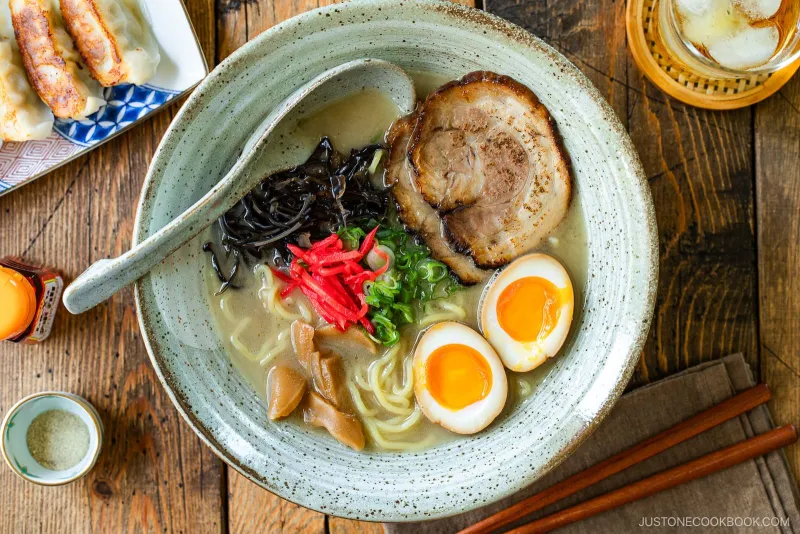
Photo: ramen tasting notes journal with chopsticks and bowl of ramen broth, via www.justonecookbook.com
There's a specific kind of frustration that hits when you finish a truly great bowl of ramen and someone asks you what made it so good. You know it was incredible. You felt it. But the words that come out are something like, "I don't know, it was just... rich?" And then the moment passes, and so does the memory.
That gap between what your tongue knows and what your brain can articulate is exactly what a small but passionate corner of the ramen community has decided to close — deliberately, methodically, and with the kind of obsessive energy that only noodle devotees can sustain.
Eating on Autopilot (And Why That's a Problem)
Food scientists have a term for the way most people eat: hedonic baseline. Basically, your brain decides whether something tastes good or bad, files it away, and moves on. It's efficient. It's also the enemy of genuine flavor memory.
Wine sommeliers figured this out decades ago. Coffee cuppers built an entire professional discipline around it. Perfumers train for years just to distinguish between 200 variations of the same floral note. The common thread? All of them use language as a tool for sharpening perception. When you give a sensation a name, you remember it differently. You start to notice it again the next time. You begin to track it.
Ramen, for all its complexity, hasn't had a widely adopted tasting framework — at least not in the US. That's starting to change.
The Flavor Wheel Comes to the Noodle Bar
Anybody who's seen a coffee flavor wheel — that dense, color-coded circle mapping everything from "roasted" to "fermented" to "floral" — understands the basic concept. You're not just saying "this tastes good." You're triangulating. You're building a map.
Some ramen enthusiasts have started doing exactly that, adapting the wheel concept to the specific architecture of a ramen bowl. One Chicago-based home cook who posts under the handle @brothlogic on Instagram spent three months building a ramen flavor wheel from scratch, cross-referencing her own tasting notes with Japanese culinary texts and food chemistry resources. Her wheel breaks into four primary zones: fat expression (where does the richness land — front of the mouth, back, coating?), umami depth (layered vs. immediate vs. lingering), aromatic character (smoky, oceanic, fermented, herbaceous), and structural tension (the interplay between salt, acid, and heat).
"Wine people talk about structure all the time," she told us. "But nobody really talks about the structure of a ramen broth. There's so much happening architecturally in a great bowl, and once you start naming those things, you can't un-hear them."
Borrowing from the Sensory Pros
The techniques being borrowed from other tasting disciplines are surprisingly transferable.
From wine: the concept of a "finish" — how long does the flavor linger, and what does it taste like at the end? A tonkotsu broth might have a long, fatty finish that coats your palate. A shio broth might be clean and brief. Neither is better; they're just different. Knowing that distinction helps you understand what you're actually in the mood for before you even sit down.
From coffee cupping: the practice of tasting blind, without visual cues. A handful of ramen enthusiasts in the Pacific Northwest have started hosting what they call "dark bowl" nights — low-light tastings where you can't see the color or opacity of the broth before you drink it. The goal is to strip away assumption and let flavor speak first.
From perfumery: the idea of top notes, middle notes, and base notes. In perfume, top notes are what you smell first; they fade quickly. Base notes are what linger. Apply that to ramen: the first sip might hit with garlic and ginger (top notes), settle into the savory depth of the tare (middle notes), and leave behind the slow warmth of rendered pork fat or dried fish (base notes). Once you start tracking that arc, every bowl becomes a story with a beginning, middle, and end.
The Tasting Journal as a Living Document
For a lot of people in this community, the physical act of writing things down is what makes the system stick. Not Instagram captions. Not star ratings. Actual written notes.
A Seattle software engineer named Marcus has kept a ramen journal for four years. He uses a custom template he designed himself: date, shop, bowl ordered, broth base, and then four open-ended prompts — first impression, what surprised me, what I wanted more of, and what I'd change. He's got entries for over 300 bowls, including a half-dozen trips to Japan.
"The rating system stuff never worked for me," he says. "Numbers don't tell you anything useful when you're trying to remember a bowl six months later. But if I wrote down 'the broth tasted like the sea right before a storm,' I know exactly what that bowl was."
That kind of evocative, personal language is actually closer to how sensory memory works. Smell and taste are processed through the limbic system — the same part of the brain that handles emotion and long-term memory. Attaching a vivid descriptor to a flavor experience helps encode it more durably than a numerical score ever could.
Building Your Own Lexicon: Where to Start
You don't need a custom-designed journal or a perfumer's training to start building a personal flavor vocabulary. You need a bowl of ramen and about five extra minutes of attention.
Start small. On your next visit — whether that's to a local shop or a bowl you're making at home — try to answer just three questions before you finish eating:
- Where does the flavor land? Front of the mouth, back, or all the way through? Does it coat or does it cut clean?
- What's the loudest element, and what's the quietest? In a great bowl, there's usually something subtle working in the background. What is it?
- What does it remind you of? Not necessarily another ramen — it could be a season, a place, a memory. That association is your brain doing the encoding work for you.
Write those answers down, even in your phone's notes app. Do it for five bowls. By the sixth, you'll notice you're tasting differently before you even start writing.
Why Any of This Matters
At its core, building a flavor lexicon isn't about becoming a critic or gatekeeping what counts as a good bowl. It's about paying attention — about showing up fully to an experience that deserves it.
Ramen is one of those rare foods that rewards attention at every level. The broth alone might have taken 18 hours to develop. The noodles were calibrated to a specific hydration ratio. The tare was built from a recipe someone spent years refining. When you eat that bowl on autopilot, you're not just missing the flavor. You're missing the story.
Building your own vocabulary is how you start to hear it.