The Quiet Bowl: Why the Most Disciplined Ramen Is Also the Most Radical

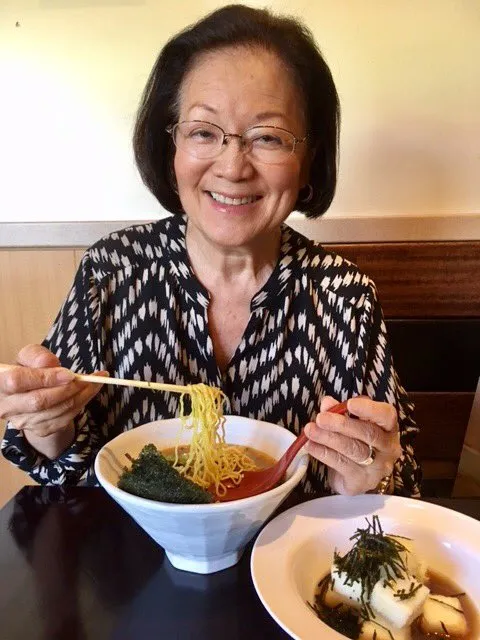
Photo: minimalist Japanese ramen bowl simple broth restaurant, via dropinblog.net
When Doing Less Feels Like a Risk
Walk into most ramen shops in major American cities right now and you're likely to encounter something spectacular. Truffle oil drizzled over a cloud of foam. Lobster broth with a miso tare that took three weeks to ferment. Noodles dyed with squid ink, topped with a sous vide egg that practically glows. It's impressive. It's Instagrammable. And it's almost the opposite of what many classically trained ramen cooks consider the soul of the craft.
Somewhere in that gap between spectacle and simplicity lives one of the most interesting tensions in American food culture right now. Because ramen, at its philosophical core, was never supposed to be loud.
"The hardest thing I ever did was take things off the menu," says one ramen chef based in Portland who trained in Tokyo for two years before opening his own shop. "Adding another topping is easy. Trusting that the broth is enough — that's terrifying."
That fear is real, and it's not unfounded. American diners, broadly speaking, have been conditioned to equate value with volume. A bowl that arrives looking sparse can read as expensive for what it is, even if the broth underneath required 18 hours of careful attention and a level of ingredient sourcing that would make a Michelin-starred kitchen sweat.
The Philosophy of Mugen in a Minimal Bowl
The name mugen means infinite — boundless, without limit. And there's a version of that infinity that looks like endless toppings and rotating seasonal specials. But there's another version, quieter and arguably more demanding, that finds the infinite inside a single, perfectly composed bowl. The idea that one broth, one noodle, one carefully chosen garnish can contain multitudes.
This is closer to the spirit of shokunin — the Japanese concept of a craftsperson who dedicates their life to mastering one thing. The ramen shokunin doesn't innovate for the sake of novelty. They refine. They repeat. They shave seconds off their noodle cook time until the texture is exactly what they want, every single service.
In Japan, this approach is so common it barely warrants discussion. Shops in Tokyo, Kyoto, and Fukuoka have been serving essentially the same bowl for decades. The menu might be a single item. The line outside might wrap around the block anyway. Because regulars aren't coming for surprise — they're coming for the comfort of something done exactly right.
America doesn't have much of that culture yet. But it's starting to grow.
Chefs Who Chose the Hard Path
In Chicago, a small ramen counter tucked into a neighborhood that doesn't get much food press has been running a three-item menu for years. Shoyu, shio, and a seasonal special that rotates every few months. The chef, who spent time studying under a ramen master in Niigata, describes her philosophy in blunt terms.
"People ask me when I'm going to add more options. I tell them: when I've fully figured out these three. I haven't yet."
That kind of humility is unusual in a food landscape that rewards chefs for being bold, distinctive, and quotable. But it points to something real about what mastery actually looks like in this craft. A tonkotsu broth that's properly emulsified — where the fat and water have bonded into something milky and cohesive rather than greasy — requires not just a good recipe but thousands of repetitions. The margin between transcendent and merely good is invisible to the eye and obvious on the tongue.
In New York, a chef who previously worked in a high-end French kitchen made the deliberate choice to strip his ramen down after watching customers at his first pop-up ignore the broth entirely in favor of photographing the toppings. "I realized I was building a distraction," he says. "The broth was an afterthought in my own bowl. That was embarrassing."
He now runs a tasting-style ramen experience where diners are served the broth first, alone, before anything else is added. It sounds gimmicky until you experience it. The clarity of a well-made shio broth — clean, mineral, almost delicate — lands completely differently when there's nothing else competing for your attention.
Is American Ramen Culture Ready for Restraint?
Here's the honest tension: the maximalist wave in American ramen isn't just a marketing gimmick. It served a real purpose. Those loaded, creative, sometimes chaotic bowls are a huge part of why ramen broke out of Japanese-American neighborhoods and became a genuine national obsession. Fusion ramen got people in the door. It made the food exciting to audiences who might have found a traditional bowl too unfamiliar.
And there's a reasonable argument that American ramen culture doesn't need to choose between innovation and restraint — it needs both, simultaneously, operating in different corners of the market.
But there's also something worth examining in the way minimalism gets dismissed as boring or insufficiently creative. A shio ramen made with a single-origin sea salt, a dashi built from specific dried fish sourced from one coastal region of Japan, and a noodle hydration dialed in to 38 percent isn't simple. It's just quiet about its complexity. The work is invisible because the work is complete.
What the Zen of the Bowl Actually Asks of You
Eating a minimalist ramen well requires something that American dining culture doesn't always encourage: slowing down and paying attention. There's no Instagram moment built into the bowl. No moment where you crack a yolk and watch it bleed gold across the surface for the camera. The reward is subtler — a finish that lingers, a warmth that settles, a second and third sip of broth that reveals something the first didn't.
That's not a lesser experience. It might actually be a deeper one.
Chefs who've committed to this path tend to describe a specific kind of regular customer who gets it — someone who comes back not because the menu changed but because they're still discovering things in the bowl they missed before. That relationship between diner and dish, built over time, is something the maximalist approach can't easily replicate.
Mugen — infinite — works in both directions. There's infinite possibility in endless variation. And there's infinite depth in a single, perfected bowl. The ramen culture that's growing in America is big enough to hold both truths. But the quieter one might be the harder, and ultimately more rewarding, path to walk.