Slurp Therapy: Why Ramen Has Become the Unofficial Stress Relief for a Burned-Out Generation
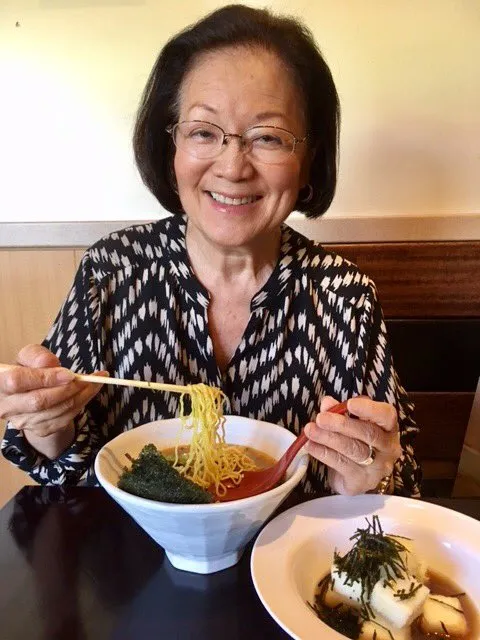
Photo: United States Senate - The Office of Mazie Hirono, Public domain, via Wikimedia Commons
Somewhere between your third unanswered email and your fifth consecutive hour on a screen, something in your brain quietly files a request: I need ramen. Not a protein bar. Not a sad desk salad. Ramen. Hot, fragrant, loaded with toppings, served in a bowl big enough to feel like a hug.
This isn't a coincidence, and it's not just hunger talking. Across the United States, ramen has become the unofficial meal of a generation that's perpetually overstimulated and chronically under-rested. Graduate students, burned-out tech workers, freelancers, nurses pulling double shifts — they're all showing up at ramen shops and finding something they didn't expect to find: a moment of actual peace.
The Ritual Is the Point
Here's what separates ramen from most fast-casual meals: it demands your attention. You can't eat a proper bowl of ramen while answering Slack messages. The broth is too hot. The noodles need to be twirled. The soft-boiled egg needs to be halved at exactly the right moment. Even the act of slurping — loud, unapologetic, deeply satisfying — requires you to be present.
Food researchers have long noted that eating rituals, even simple ones, can act as a psychological buffer against stress. The repetitive, sensory-rich experience of eating something warm and layered pulls the nervous system out of fight-or-flight mode and into something closer to rest. Ramen, with its steam rising off the surface, its complex smell, its interplay of textures, checks nearly every box.
There's a reason tea ceremonies exist. There's a reason people find comfort in baking bread. Ritual eating is a form of grounding, and ramen — perhaps more than any other dish in the American dining landscape right now — delivers that ritual in a bowl you can order for under twenty bucks.
Why This Generation, Why Now
Millennials and Gen Z didn't fall for ramen by accident. This is the generation that grew up eating instant noodles as a survival food — cheap, fast, and available at 2 a.m. during finals week. But as they've gotten older and their palates have grown, they've followed that familiar flavor profile into something far more sophisticated.
Real ramen — the kind built on a twelve-hour tonkotsu or a carefully fermented miso tare — carries the same nostalgic comfort as that college-dorm standby, but it delivers actual depth. It satisfies on multiple levels: emotionally (it feels like home), physically (it's genuinely nourishing), and even socially (ramen shops tend to have a communal, low-pressure vibe that's increasingly rare in American dining).
And then there's the timing. The pandemic reshuffled how Americans think about food and comfort. When the world locked down, people learned to cook ramen at home, to simmer broth for hours, to treat a bowl of noodles as a project worth caring about. That investment changed the relationship. Ramen stopped being a quick fix and started being a practice.
The Communal Bowl Effect
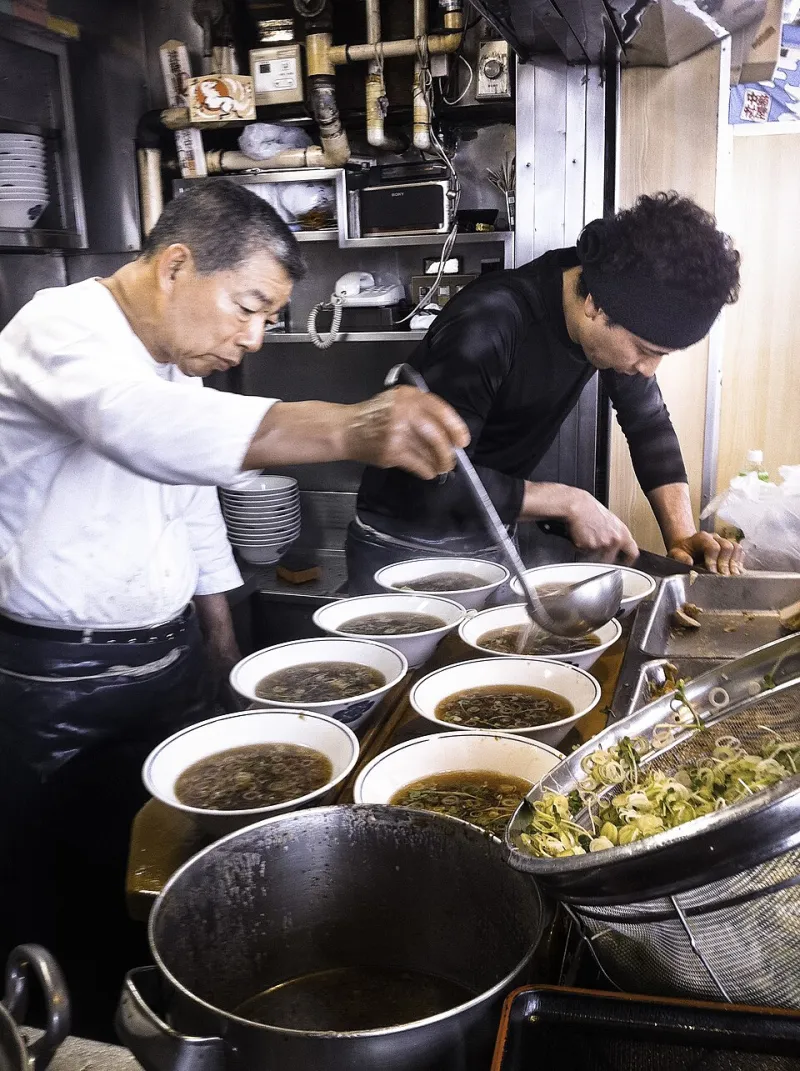
Walk into almost any ramen shop in a major American city on a weeknight and you'll notice something interesting: people are eating alone, but nobody seems lonely. There's a particular social architecture to a ramen counter — seats close together, chefs visible behind the bar, the shared soundtrack of broth bubbling and chopsticks clicking — that creates intimacy without obligation.
For a generation that often reports feeling isolated despite being constantly connected, this is genuinely valuable. You're not expected to perform. You're not on a date that needs to go well. You're just a person, eating a bowl, and so is everyone else around you. The shared experience of the meal does the social heavy lifting.
Ramen shops in cities like New York, Los Angeles, Chicago, and Austin have started functioning almost like neighborhood anchors — the kind of place you go when you need to feel like part of something without having to explain yourself. That's a role that used to belong to diners and corner bars, and ramen has quietly stepped into it.
Intentional Eating in an Unintentional World
The wellness industry has spent years trying to sell Americans on mindfulness, with mixed results. Meditation apps, journaling prompts, digital detoxes — all useful, all underused. But nobody had to convince anyone to eat a bowl of ramen mindfully. The bowl does it for you.
There's growing conversation in nutritionist and wellness circles about the value of what's sometimes called "intentional eating" — choosing foods and eating environments that slow you down and reconnect you with the physical act of nourishing your body. Ramen fits this framework almost perfectly. It's not a food you eat while distracted. It's a food that insists on your presence.
The warmth of the broth, the umami depth that lingers on the palate, the satisfying resistance of a well-made noodle — these are sensory experiences that pull you out of your head and back into your body. In a culture that spends enormous energy trying to escape the body through screens and productivity culture, that's not a small thing.
What the Bowl Is Really Saying
At Menya Mugen, we think about ramen as something with layers — not just in the bowl, but in what it means to the person holding the chopsticks. A bowl of ramen at the end of a hard week isn't just dinner. It's a small act of self-respect. It's saying: I deserve something that took time and care to make. I deserve to sit down. I deserve something warm.
For a generation that has been told to optimize everything, to hustle constantly, to treat rest as something to be earned rather than built into life — choosing ramen is almost a quiet act of rebellion. It's slow food dressed up as casual dining. It's a twelve-hour broth hiding inside a thirty-minute lunch break.
And maybe that's exactly why it works. Ramen doesn't ask you to overhaul your lifestyle or download another app. It just asks you to sit down, pick up your chopsticks, and eat. Everything else can wait until the bowl is empty.
And honestly? The bowl is never quite empty enough.