Breaking Down the Bowl: One Chemist's Quest to Decode Ramen at the Molecular Level
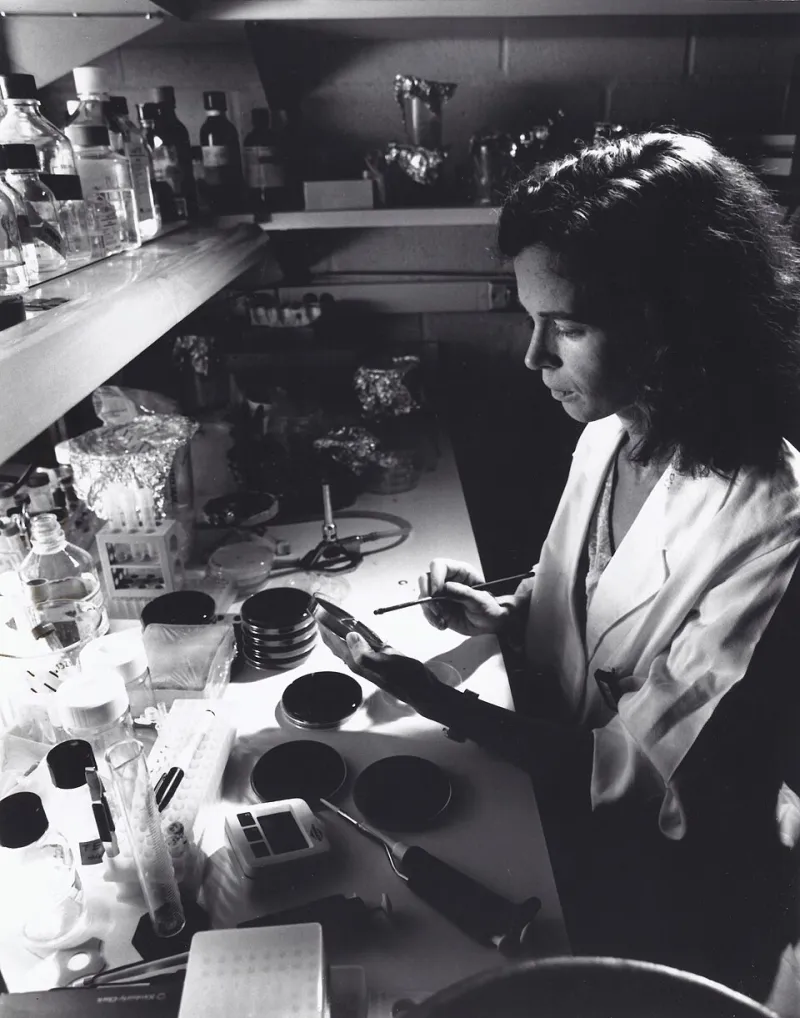
Photo: The U.S. Food and Drug Administration, Public domain, via Wikimedia Commons
Dr. Marcus Hale never planned to become a ramen obsessive. He spent most of his career studying protein denaturation in pharmaceutical applications at a lab outside of Portland, Oregon. Then he ate a bowl of tonkotsu in a tiny shop in Kyushu, and something clicked — not just emotionally, but scientifically.
"I remember thinking, this isn't just food," Hale says. "This is applied chemistry. Whoever made this understood emulsion theory better than half the people I went to grad school with."
That meal sent him down a rabbit hole he still hasn't climbed out of. Today, he runs a small food science consultancy while moonlighting as what he calls a "ramen troubleshooter" — helping home cooks and small restaurant owners diagnose why their broths fall flat, turn greasy, or lose depth. His approach is unconventional, occasionally controversial, and genuinely fascinating.
The Emulsion Problem Nobody Talks About
Ask most ramen cooks why a great tonkotsu broth looks milky white and they'll say "you have to boil it hard." That's true, but it's only half the story.
What's actually happening is forced emulsification. When pork bones are subjected to a vigorous, rolling boil for extended periods, the mechanical energy breaks fat droplets into microscopic particles and suspends them throughout the liquid. The result is a broth that looks opaque and creamy — not because it's thickened with starch or dairy, but because light scatters off millions of tiny suspended fat particles.
"It's the same physics as homogenized milk," Hale explains. "The fat hasn't gone anywhere. It's just been broken up small enough that it can't separate out."
Where home cooks go wrong, he says, is inconsistency. Start a broth at a rolling boil, then let it drop to a simmer, then crank it back up — and you're working against yourself. The emulsion destabilizes and re-stabilizes repeatedly, and the final product ends up with an uneven texture, often greasy on top and thin underneath.
His fix? Commit to the boil. If you're making tonkotsu, you're making tonkotsu. Keep that heat high and steady for the full duration.
The Maillard Reaction: Ramen's Secret Flavor Engine
Here's where it gets genuinely nerdy — and genuinely useful.
The Maillard reaction is the chemical process that happens when amino acids and reducing sugars are exposed to heat. It's responsible for the brown crust on a seared steak, the golden color of toasted bread, and — critically — much of the deep, complex flavor in a well-made ramen broth.
Hale's research focuses on how roasting bones before adding them to a pot dramatically accelerates and intensifies this reaction. The caramelization of bone marrow sugars combined with the browning of surface proteins creates hundreds of new flavor compounds that simply don't exist in an unroasted bone.
"When people say a broth tastes 'deep' or 'roasted' or 'complex,' they're tasting Maillard compounds," he says. "It's not magic. It's chemistry you can actually control."
For home cooks, the takeaway is practical: roast your bones at around 400°F before they go into the pot. Not until they're charred — just until they're a deep golden brown. The difference in your final broth will be significant.
Collagen, Gelatin, and the Texture Nobody Can Quite Name
There's a quality in exceptional ramen broth that's hard to put into words. It coats the inside of your mouth. It has weight without being thick. It clings to the noodle. Chefs sometimes call it koku — richness or body. Hale calls it collagen conversion, and it's one of his favorite topics.
Collagen is a structural protein found in connective tissue, cartilage, and bones. When exposed to sustained heat in a water environment — which is exactly what happens during a long broth cook — collagen breaks down into gelatin. Gelatin molecules are what give a properly made broth that silky, almost lip-sticking quality.
The catch? This conversion takes time and the right temperature. Too low, and collagen doesn't break down fully. Too high for too long, and you can actually over-extract, pulling bitter mineral compounds from the bones that compete with and muddy the gelatin's clean richness.
"There's a window," Hale says. "And understanding that window is the difference between a broth that gels in the fridge and one that just turns into cloudy water."
For most pork-based broths, he recommends a minimum of eight hours, with twelve being the sweet spot. Chicken-based broths, which have more accessible collagen structures, often hit their peak around four to six hours.
What This Means for Your Kitchen
Hale is quick to point out that science isn't meant to replace intuition in the kitchen — it's meant to support it. The greatest ramen masters in Japan aren't running around with pH meters and thermocouples. They've internalized these principles through thousands of hours of repetition.
But for the rest of us? Understanding the "why" behind the process gives us a roadmap when things go wrong.
Broth too greasy? Your emulsion broke. Broth tastes flat? You may have skipped the roasting step or under-extracted your aromatics. Broth lacks body? Not enough collagen-rich material, or you didn't cook it long enough.
"Ramen is actually a very forgiving system if you understand its logic," Hale says. "It rewards patience and consistency more than raw talent."
That might be the most encouraging thing a chemist has ever said about cooking. The bowl isn't mysterious — it's just waiting to be understood. And once you start seeing it that way, every pot of broth becomes a small experiment worth running.
At Menya Mugen, we think that's exactly the right spirit to bring to the kitchen. Infinite curiosity. Endless improvement.