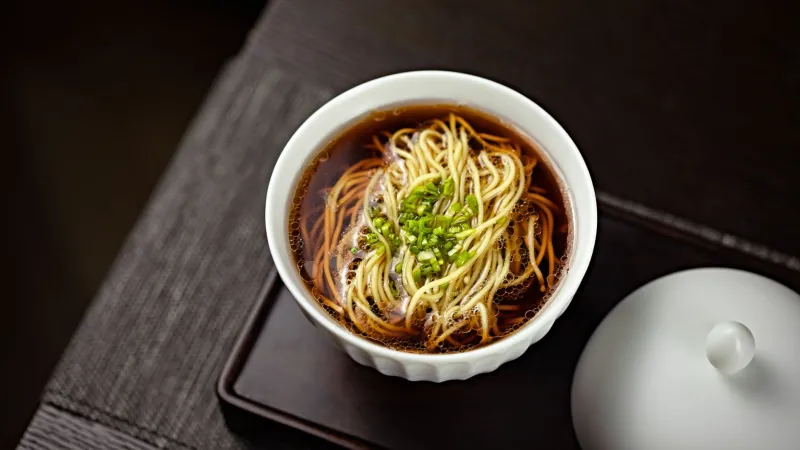
Same Bowl, Different Day: Why Your Favorite Ramen Keeps Tasting Different
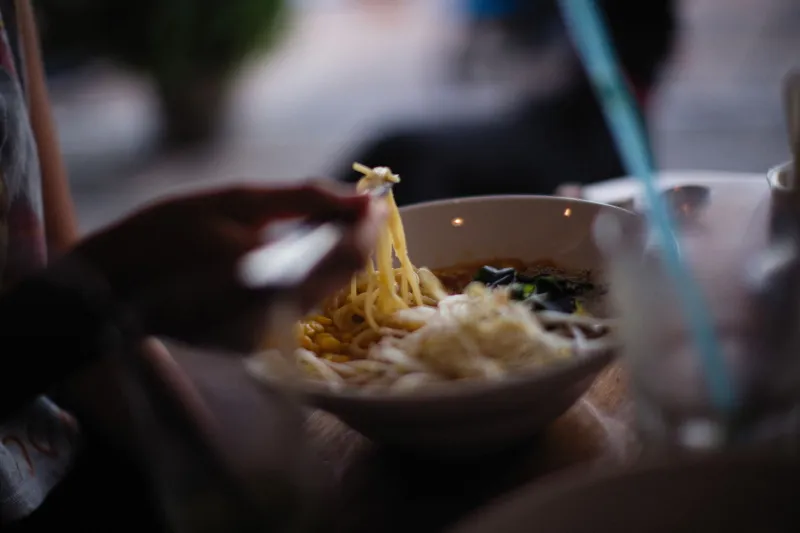
Let's say you have a ramen spot. Your spot. The one you've recommended to people, maybe even argued about. You've been there enough times to know the menu by heart, to know which seat you prefer, to know roughly how long the wait runs on a Saturday night.
And then one night you go back and the bowl just doesn't hit. It's fine. It's technically correct. But whatever it was that made you a believer the first time — that specific feeling, that particular depth — it isn't there. You look at the bowl, slightly confused, and think: did they change something?
Probably not. And that's the interesting part.
The phenomenon of the inconsistent favorite is one of the most quietly frustrating experiences in ramen eating. It's also one of the most revealing — not about the restaurant, but about you.
The Myth of the Fixed Palate
We tend to think of our taste preferences as stable things. We like what we like. But taste perception is actually a dynamic process that shifts constantly based on a staggering number of variables, most of which have nothing to do with the food itself.
Your current hunger level affects how intensely you perceive saltiness and fat. Your hydration status changes your sensitivity to bitterness. What you ate in the hours before a meal — especially anything strongly flavored — creates a kind of sensory baseline that the next meal has to compete with. Even the temperature of the room you're eating in influences how certain aromas register.
Then there's the psychological layer. Stress suppresses the prefrontal cortex activity associated with savoring and pleasure. Eating while distracted — checking your phone, half-engaged in a difficult conversation — measurably reduces flavor enjoyment. Eating with someone you love, in contrast, can literally make food taste better. These aren't metaphors. They're documented physiological responses.
So when your ramen tastes different on a bad Tuesday than it did on a celebratory Friday, the bowl hasn't changed. The instrument receiving it has.
Context Is an Ingredient
Chefs have known this intuitively for a long time, even if the language for it has been borrowed from psychology rather than culinary tradition. The Japanese concept of ma — the meaningful use of space and pause — has a flavor equivalent. The context surrounding a meal is part of the meal. The atmosphere, the company, the season, even the light.
Think about the ramen you ate on a bitter January night after walking six blocks in the cold versus the same bowl on a warm September evening when you were already comfortable. The cold-night version almost certainly tasted richer, more restorative, more necessary. That's not nostalgia talking — that's your body's thermoregulatory system influencing your perception of warmth, fat, and salt in real time.
Season matters more than people expect. Our bodies genuinely crave different things across the year. The tonkotsu that feels like a hug in February can feel heavy and exhausting in July. The light shio that seems almost too subtle in winter might taste revelatory on a hot afternoon when your appetite is running quiet. A bowl that was perfect in one season might be genuinely wrong for you in another — same recipe, different result.
The Comparison Problem
Another underappreciated factor: the bowl you're eating right now is always being unconsciously compared to every bowl you remember. And memory is not a reliable archive.
Flavor memory is reconstructive rather than reproductive — meaning your brain doesn't play back a recording of a past taste, it rebuilds an approximation of it using whatever cues are available. Over time, that reconstruction tends to drift toward the emotional peak of the experience rather than its actual sensory content. The bowl you remember as transcendent was probably great, but your memory has quietly amplified the best parts and edited out the ordinary ones.
This means that every return visit to a beloved ramen spot involves competing with a version of itself that has been emotionally enhanced by time. The real bowl rarely wins that fight. Not because it got worse, but because the remembered bowl got better.
"First bowl syndrome" is what some ramen enthusiasts call it — the way the initial encounter with a style or a shop tends to carry an outsized emotional charge that subsequent visits can't replicate. The antidote isn't to lower your expectations. It's to stop using the first bowl as the benchmark.
Building a More Honest Framework
So what do you do with all this? A few practical shifts can help.
First, start noting your context alongside your bowl. Not just what you ordered, but when, with whom, in what mood, after what kind of day. Over time, patterns emerge. You might discover that you consistently prefer lighter broths when you're stressed, or that you rate tonkotsu higher on cold days regardless of the shop. That self-knowledge is genuinely useful.
Second, separate technical quality from personal resonance. A bowl can be excellently made and still not be right for you on a given day. That's not a flaw in the bowl or in you — it's just a mismatch of timing. Learning to recognize the difference between "this bowl isn't working for me right now" and "this bowl isn't good" is one of the more sophisticated moves available to a ramen eater.
Third, resist the urge to chase the original experience. If your first visit to a shop was extraordinary, go back with curiosity rather than expectation. Approach it as a new encounter with a familiar subject. You'll often find things you missed the first time — subtleties that the initial excitement didn't leave room for.
The Phantom Perfect Bowl
There's a version of ramen obsession that becomes its own trap: the endless search for a bowl that matches some internal ideal — a composite of every great bowl ever eaten, assembled in memory into something that probably never existed in one place.
That phantom bowl will always disappoint the real ones. Not because real bowls aren't good, but because the phantom is a moving target, shaped by emotion and memory in ways that no kitchen can replicate.
The more interesting pursuit is understanding your own preferences as they actually are — shifting, seasonal, context-dependent, and genuinely yours. Not a fixed point to reach, but a living relationship with a food you love.
At Menya Mugen, we think the bowl that changes on you is doing exactly what it should. It's showing you something new about yourself every time. That's not a problem. That's the whole point.