Noodles Under Pressure: How American Ramen Shops Are Fighting to Keep the Bowl Alive
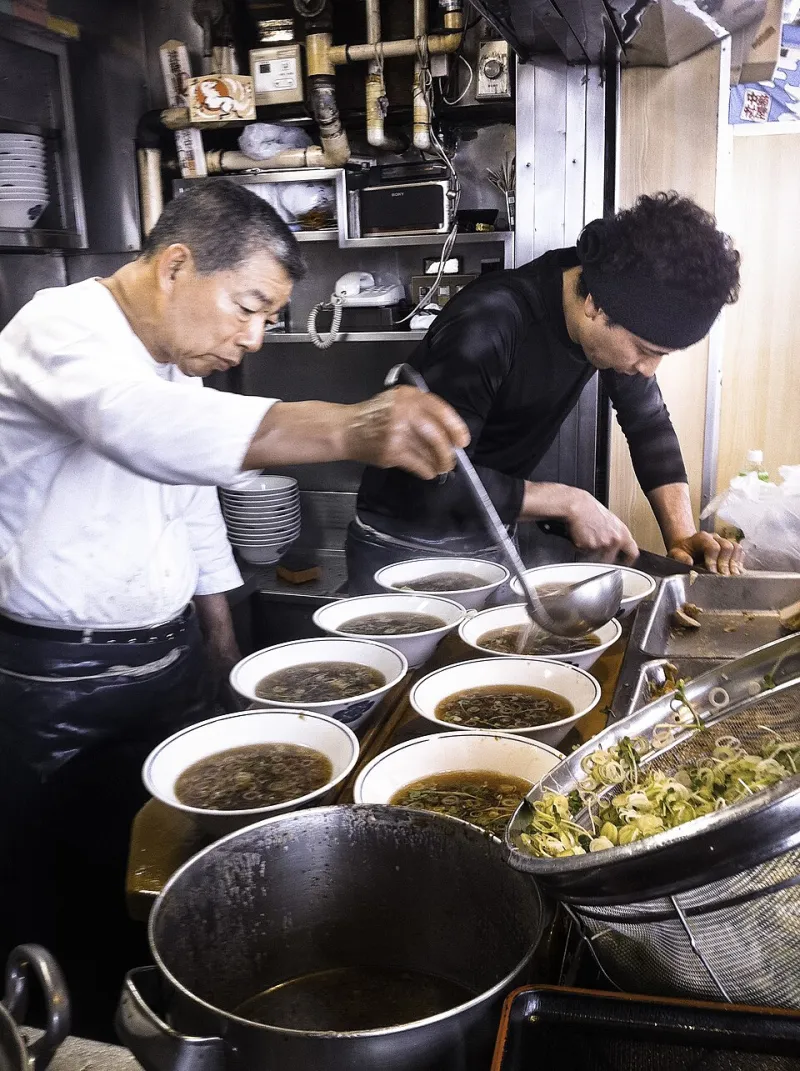
Photo: elmimmo, CC BY 2.0, via Wikimedia Commons
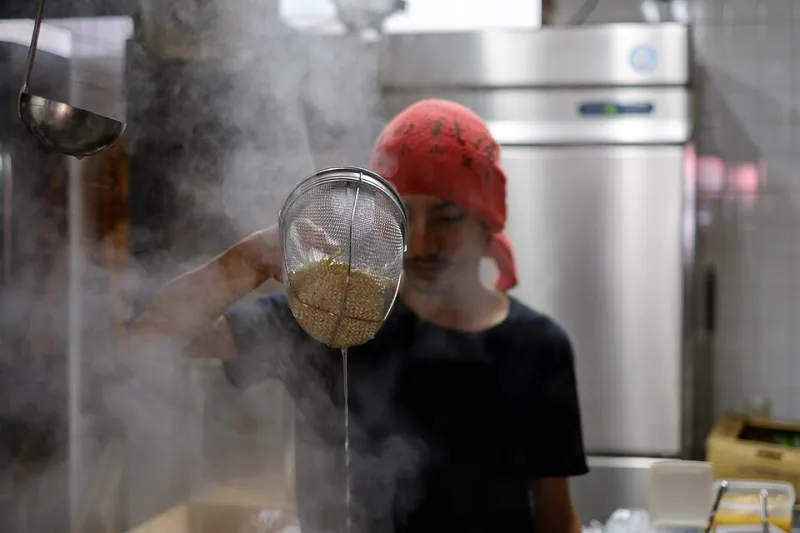
There's a running joke in the ramen world that a bowl of noodles is basically a lie. A beautiful, soul-warming lie — one that hides somewhere between twelve and eighteen hours of labor, forty-plus ingredients, and a set of costs that would make most diners push back from the table if they saw them itemized. For years, American ramen shops absorbed a lot of that reality quietly, pricing bowls at a sweet spot that kept the seats full without scaring anyone off. That math is getting harder to pull off.
Inflation didn't hit every restaurant category equally, and ramen shops — with their reliance on imported nori, specialty soy sauces, fresh-milled noodles, and pork bones by the case — got hit somewhere between "rough" and "genuinely brutal." The question rippling through the industry right now isn't just about survival. It's about identity: can you keep making the real thing when the real thing keeps getting more expensive to produce?
The Ingredient Problem Nobody Warned You About
Ask any ramen shop owner about their cost structure and they'll tell you the same thing: it's not one big expense, it's a hundred small ones that compound. Kombu from Hokkaido. Specialty miso from regional Japanese producers. Chashu pork that has to be braised low and slow for hours. Even the eggs — a well-made ajitsuke tamago requires a precise marination window and a specific kind of egg that holds a jammy yolk under pressure. None of that is cheap. And over the past two years, almost none of it has gotten cheaper.
Chef Marcus Ikeda, who runs a small ramen counter in Portland, Oregon, says his ingredient costs jumped roughly 34 percent between 2022 and 2024. "The bones are the bones — we're not going to swap those out for something inferior," he says. "But the stuff around the edges, the garnishes, the add-ons, the little finishing touches — we had to get really honest about what was earning its place in the bowl."
That kind of surgical audit has become common. Shops are rethinking portion sizes for certain toppings, negotiating longer-term contracts with local pork suppliers, and in some cases, quietly reformulating broths to stretch without diluting. The ones doing it well are the ones who understand that flavor isn't always about volume — it's about precision.
Local Sourcing as a Lifeline (and a Gamble)
One of the more interesting pivots happening in the American ramen scene is a shift toward hyper-local sourcing. On paper, it sounds like a chef-driven luxury. In practice, it's increasingly a financial strategy.
A ramen shop in Nashville recently partnered with a Tennessee pork farm to lock in a steady supply of bones and belly at a negotiated rate — insulating themselves from the spot-price volatility that's been hammering restaurants dependent on national distributors. A shop in Chicago started working with a local soy sauce producer, not because it's more authentic, but because the shipping costs on imported Japanese soy have made long-distance sourcing feel reckless.
"I used to feel like I had to source everything from Japan to call myself a real ramen shop," admits one Chicago owner who asked to remain anonymous. "Now I think about it differently. The philosophy is Japanese. The technique is Japanese. But if I can find a local producer who's making something excellent, and it keeps my doors open, that's a trade-off I'm willing to make."
It's a nuanced position, and not everyone agrees with it. Purists argue that certain ingredients — shinachiku bamboo shoots, specific grades of niboshi, proper tonkotsu-grade pork — simply can't be replicated domestically. They're not wrong. But the shops making thoughtful compromises are at least staying in the conversation.
Labor Is the Other Shoe
Ingredient costs are visible. Labor costs are the thing that keeps owners up at night.
Ramen is famously labor-intensive. The broth alone requires someone physically present for most of a 12-hour cook. Noodles need to be made or at least portioned daily. The mise en place for a single service shift is extensive. Minimum wage increases across blue-state markets have added real pressure on top of a post-pandemic labor shortage that the restaurant industry still hasn't fully recovered from.
Some shops have responded by going smaller — trimming hours, cutting to five-day weeks, or moving to a counter-only format that requires fewer front-of-house staff. Others have invested in equipment: commercial noodle machines, automated broth timers, prep tools that reduce the human hours per bowl without compromising the output.
"We're not trying to become a factory," says Ikeda. "But if a machine can cut my noodle prep time in half and free up my cook to focus on the broth, that's not cheating. That's just being smart about where human skill actually matters."
What This Means for the $16 Bowl
The uncomfortable truth is that ramen in America has probably been underpriced for most of its existence. The culture of cheap noodles — imported from a context where ramen shops run on razor-thin margins sustained by absurd volume — never fully translated to the American cost structure. For a while, novelty and enthusiasm papered over the gap. Now the gap is harder to ignore.
Prices are going up. Most shops that have raised prices — cautiously, incrementally — report that their regulars have largely accepted it. A bowl that was $14 in 2020 is now $17 or $18 in many markets, and the dining room is still full on a Friday night. Customers who care about quality seem to understand, at least intuitively, that something this labor-intensive was never really a bargain to begin with.
The bigger risk is accessibility. If ramen prices keep climbing, the food starts to drift away from the everyday-meal positioning that made it culturally resonant in the first place. It becomes a special-occasion thing. That's a loss — not just commercially, but culturally.
The shops navigating this best are the ones being transparent about it. Chefs who explain their sourcing on the menu, who talk openly about why certain ingredients cost what they cost, who frame the price as a reflection of craft rather than an apology — those shops are building the kind of customer loyalty that weathers economic pressure.
The Bowl Isn't Going Anywhere
Here's the thing about ramen: it has survived harder moments than an inflationary cycle. It emerged from post-war scarcity. It evolved through decades of regional competition and culinary reinvention. It crossed an ocean and took root in a completely different food culture. American ramen shops are, in their own way, continuing that tradition of adaptation.
The shops that make it through this period won't be the ones that cut corners until the bowl stops tasting like anything. They'll be the ones that figured out where the soul of the dish actually lives — and protected that, even when everything around it had to change.
At Menya Mugen, we believe the bowl is worth fighting for. And from what we're seeing, a lot of chefs across this country feel exactly the same way.