Off the Grid and Into the Bowl: America's Secret Ramen Underground

Photo: underground pop-up food event garage night crowd, via karmasgems.com
The address you get isn't an address, exactly. It's a parking lot behind a dry cleaner in a part of town you've never had a reason to visit. You show up at the time the Instagram story told you to, and there are already nine people standing in a loose cluster near a folding table. Nobody's talking much. They're all just waiting.
Then a garage door rolls up, and the smell hits you — twelve hours of pork bones and charred aromatics and something floral you can't quite identify — and suddenly the whole scene makes perfect sense.
Welcome to the American ramen underground.
Who These People Actually Are
They don't call themselves ghost chefs. That's a term that floated up from food media and stuck. Most of them would tell you they're just people who got really, really into ramen and couldn't stop.
The origin stories tend to follow a pattern. Someone travels to Japan — sometimes for work, sometimes on a food-focused trip — and eats a bowl that resets their understanding of what soup can be. They come home, start researching, start cooking, start failing, start over. After a year or two of obsessive weekend experiments, the bowls get good enough that friends start asking to pay for them. And then a pop-up happens, almost by accident.
Danny Reyes has been running an operation out of a commercial kitchen in a shared food incubator space in East Los Angeles for about three years. He works a full-time job in logistics during the week. On weekends, he makes ramen.
"I did my first pop-up because I had made way too much broth and I didn't want it to go to waste," he says. "I put it on Instagram, said I had 20 bowls, gave an address. They sold out in four minutes. That was kind of the moment where I thought, okay, this is a real thing."
He's been doing it ever since — never more than 40 bowls at a time, announced 24 to 48 hours in advance, never in the same spot twice.
The Infrastructure of a Secret
What makes the underground ramen scene interesting isn't just the food — it's the logistics. Running a pop-up outside the formal restaurant system means navigating a genuinely complicated set of constraints. Most of these operators are working without the licenses that a brick-and-mortar restaurant would carry, which means they operate in a legal gray zone that varies significantly by state and city.
Some use cottage food exemptions, which allow home cooks to sell certain categories of food directly to consumers in many states. Others partner with existing licensed commercial kitchens. A few operate on a donation model, technically giving the food away and accepting contributions — a structure that sidesteps some regulations while keeping the whole thing functional.
The community has developed its own informal infrastructure to support all of this. There are private Discord servers and group chats where regulars share information about upcoming events, warn each other about permit issues in certain jurisdictions, and trade sourcing tips for specialty ingredients. Finding fresh Sun Noodle product outside a major metro, for instance, is the kind of problem the group chat solves.
"It's weirdly collaborative for something that could be competitive," says Priya Nair, who runs occasional ramen nights out of a rented kitchen in Atlanta. "People share recipes. They share supplier contacts. If someone's doing a pop-up in your city, you go support them. It's not like there's a limited number of ramen fans."
What's Actually in the Bowl
One thing that consistently surprises first-timers at underground ramen events is the technical level of the food. These aren't hobbyist approximations of restaurant ramen — they're often deeply researched, carefully executed bowls that reflect genuine culinary ambition.
Reyes spent eight months working on his tare, the seasoning concentrate that defines the salt profile of a bowl, before he felt like it was where he wanted it. He sources his noodles fresh from a small Japanese noodle manufacturer in the San Gabriel Valley and adjusts his broth formula seasonally.
Nair's signature bowl is a shoyu-based chicken paitan — a white, emulsified chicken broth that takes nearly as long to develop as tonkotsu — topped with a slow-poached chicken breast, a soy-marinated egg she calls her "six-hour egg," and a finishing oil she makes from charred scallion and ginger. It is, by any measure, a serious bowl of ramen.
"I've eaten at a lot of good ramen restaurants," says one regular attendee at Nair's events who asked not to be named. "Her bowl is better than most of them. I don't know why she doesn't have a restaurant. I also understand completely why she doesn't have a restaurant."
That tension — between the quality of the food and the deliberate choice to stay underground — is something almost every operator in this scene navigates. Opening a real restaurant means investors, or debt, or both. It means health inspections and staffing and rent and all the things that turn a passion into a grind. The pop-up model lets them make great food on their own terms, for an audience that found them specifically because they were looking.
How to Find Them in Your City
This is the part where we can't give you a list, because the whole point is that these operations move and change and sometimes disappear. But there are reliable ways to find them.
Follow the right accounts. Search Instagram for ramen pop-up plus your city name. Look for accounts that post infrequently, don't have a website link, and communicate primarily through stories rather than posts. Those are the signals.
Get into the community. Local food Facebook groups, Reddit threads in city-specific subreddits, and Discord servers tied to food-focused communities are where the real information lives. Ask directly — the people who know will tell you if you seem genuinely interested.
Pay attention to food incubators and shared kitchens. Many underground operators rent time in licensed shared kitchen spaces. Those spaces often have their own social media presence and will sometimes promote the chefs using their kitchens.
Go to the farmers market. A surprising number of underground ramen operators start testing the waters at farmers markets before running fully independent pop-ups. It's worth walking every market in your area at least once with this in mind.
The Bowl at the End of the Garage
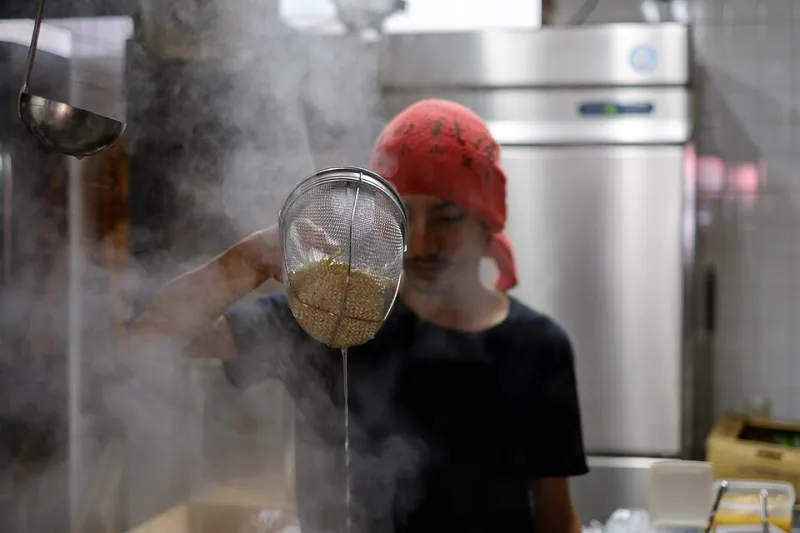
Back in that parking lot, the garage door is all the way up now. There's a folding table with a QR code for payment, a handwritten menu card with two options, and a guy in an apron ladling broth with the focused calm of someone who has done this a thousand times — even though, technically, he's done it maybe forty.
The bowl you get is served in a ceramic bowl he bought secondhand. The noodles are coiled perfectly. The egg is split to show a yolk that looks like a sunset. The broth smells like it took all week.
It didn't take all week. It took a weekend, and a year of weekends before that, and a trip to Japan that changed how someone thought about soup.
That's the ramen underground. It's not trying to be a restaurant. It's something else entirely — and in a lot of cities right now, it might be the best bowl in town.