Grown Right Here: How American Ramen Chefs Are Making the Land Part of the Broth
Wine people have been talking about terroir for centuries. The idea that a grape doesn't just taste like a grape — it tastes like the specific hillside it grew on, the mineral composition of the soil, the fog that rolled in from the bay on August mornings — is old news in Burgundy and Napa alike. Cheesemakers know it. Whiskey distillers know it. Coffee roasters have been selling single-origin stories for years.
Ramen chefs are just now catching up. And the results are genuinely surprising.
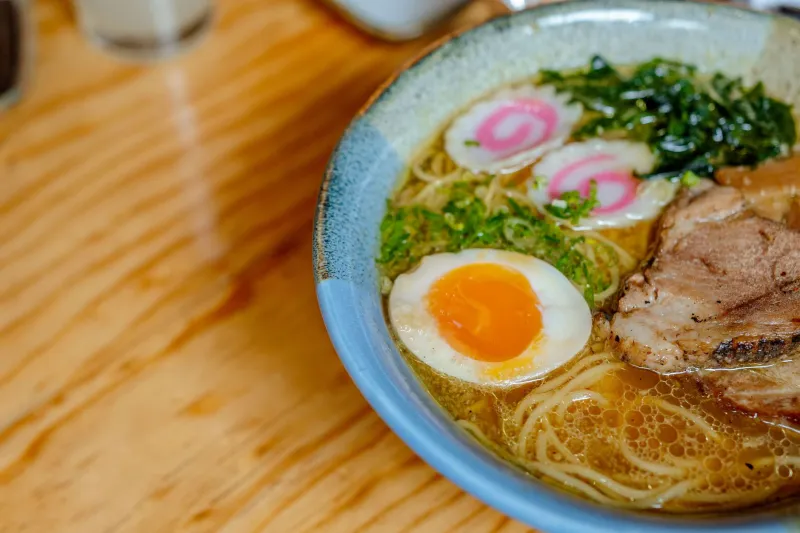
Across the US, a loose but growing movement of ramen cooks is doing something that would've seemed strange even five years ago: instead of reverse-engineering the flavors of Fukuoka or Sapporo, they're building broths that taste like here. Like the specific farm twenty miles down the road. Like the watershed their water comes from. Like the vegetables that actually grow in their county in October.
It's ramen with a zip code. And it's changing what an American bowl can be.
Why Japanese Regional Styles Aren't the Whole Story Anymore
For most of American ramen history, the reference points were Japanese. Tonkotsu from Kyushu, shoyu from Tokyo, miso from Hokkaido, shio from Hakata — these regional styles provided the vocabulary, and American chefs were largely students of that vocabulary. Learning it well was the goal. Mastery meant faithful reproduction.
That phase was necessary. You can't riff on something you don't understand, and the American ramen scene needed years of serious study before it had the fluency to start asking harder questions.
But fluency, once achieved, opens a door. And a growing number of chefs are walking through it.
The question driving the new wave isn't how do I make this taste like Japan? It's what would ramen taste like if it had always been from here?
Pork That Carries a Story
In western North Carolina, a handful of ramen shops have started working directly with Appalachian heritage breed pork producers — farms raising Ossabaw Island hogs and Red Wattle pigs on woodland forage diets that produce fat with a distinctly different flavor profile than commodity pork. The resulting tonkotsu-style broths are richer and more complex, with a slightly gamey undertone that connects the bowl directly to the mountain terrain where the animals were raised.
It's not a gimmick. When you cook a broth for twelve or sixteen hours, the animal's diet becomes part of what you're tasting. The difference between a hog raised on acorns and scrub versus one raised on industrial feed is measurable in the bowl — not as a subtle background note, but as a defining characteristic.
Chefs working this way are quick to point out that it's more expensive and logistically complicated than sourcing from a distributor. But they're equally quick to say it produces a bowl that can't be replicated anywhere else in the country. That specificity is the point.
Water: The Ingredient Nobody Talks About
Broth is mostly water. This is obvious and almost entirely overlooked in conversations about ramen flavor.
Water chemistry varies dramatically across the US — mineral content, pH, hardness, and dissolved solids all shift depending on your water source, and all of those variables affect how broth extracts flavor from bones, how tare behaves, and how noodle dough develops during mixing. A broth built in Portland, Oregon, where the municipal water is exceptionally soft and low in minerals, will taste structurally different from the same recipe executed in Phoenix, where the water is hard and mineral-forward.
Some chefs have started treating their local water not as a variable to be corrected with filtration, but as an ingredient to be understood and worked with. In the Pacific Northwest, where water softness allows for very clean, delicate extraction, several shops have leaned into shio-style broths that showcase that clarity. In the Midwest, where harder water adds a subtle mineral backbone, some chefs are finding that it actually enhances heavier miso preparations in unexpected ways.
Vegetables That Don't Travel
The kombu-and-katsuobushi dashi that forms the backbone of many Japanese-style ramens is, by definition, imported. For chefs committed to genuine local sourcing, that creates an interesting creative problem: what does a dashi made entirely from American ingredients look like?
In coastal Maine, one shop has been experimenting with local rockweed and dulse — Atlantic seaweeds with different mineral and umami profiles than Japanese kombu — as the base for a tare that tastes distinctly of the North Atlantic. The result is a shio-adjacent bowl that doesn't taste quite like anything in the Japanese canon, because it isn't supposed to.
In the Central Valley of California, chefs are working with dried chiles, sun-dried tomatoes, and roasted stone fruit to build umami foundations that reflect the agricultural abundance of the region. These aren't fusion bowls in the dismissive sense — they're genuine attempts to ask what ramen would taste like if it had evolved in a place where these were the available ingredients.
The Tension Between Tradition and Place
Not everyone in the ramen world is enthusiastic about this direction. Some purists argue that departing from Japanese technique and ingredient sourcing produces something that should be called something other than ramen — that the word carries meaning that depends on continuity with its origins.
It's a fair argument, and the chefs doing this work mostly don't fight it. Many are careful to describe their bowls as ramen-inspired or simply as noodle soups, preserving the distinction while still drawing on the structural logic — the broth, tare, noodle, and topping architecture — that makes ramen what it is.
But the creative energy is undeniable. American ramen is in a moment that feels a lot like American craft beer in the late 1990s — a period when enough people had learned the rules well enough to start breaking them productively.
What a Bowl Can Say About a Place
Terroir, at its best, isn't just about flavor. It's about connection — the idea that eating something can tell you something true about where it came from, and by extension, where you are when you're eating it.
That's a powerful thing for a bowl of ramen to do. And American chefs, working with the specific landscapes, animals, and water sources of their communities, are beginning to figure out how to make it happen.
The bowl that tastes like your town. That's the bowl worth chasing.