One Bowl, One Block: How a Single Ramen Shop Can Quietly Rebuild a Neighborhood
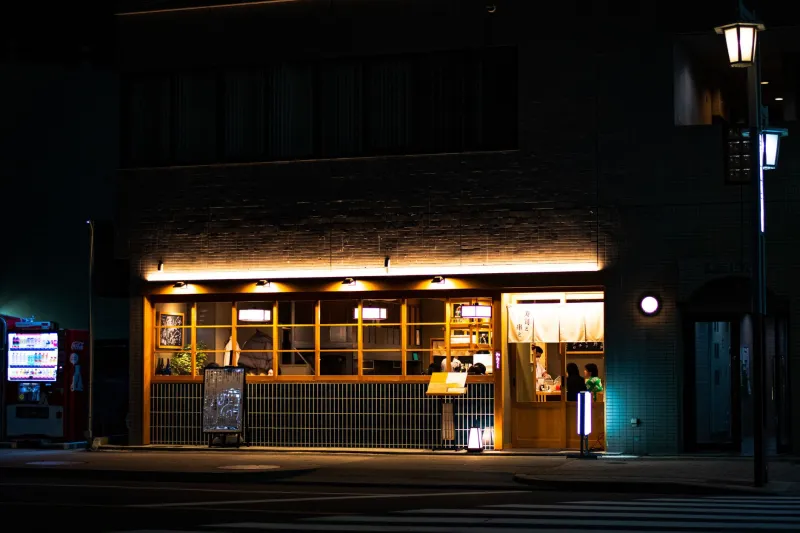
The building on East Fifth Street in Dayton, Ohio had been vacant for eleven years when Kenji Watanabe signed the lease. The neighborhood had a Dollar General, a check-cashing place, and a lot of plywood. Watanabe, a second-generation Japanese American who'd spent seven years cooking in Columbus before deciding to go out on his own, opened Mugen Tanmen in the spring of 2019. He expected a slow start. He did not expect to become an economic development story.
Three years after opening, the block had a natural wine bar, a specialty coffee roaster, and a vintage clothing shop. Property values on the street had climbed measurably. A local university's urban planning department had started citing Mugen Tanmen in its coursework. Watanabe still mostly just thinks about broth.
"I didn't set out to revitalize anything," he says with a slight laugh. "I just wanted to make the bowl I had in my head. But when it works, it works for everyone around you."
The Anchor Effect, Explained
Economists who study urban retail corridors have a concept called the anchor tenant — a business significant enough that its presence stabilizes surrounding real estate and attracts complementary businesses. For decades, that role was played by grocery stores, pharmacies, and the occasional bank branch. In post-industrial American cities, those anchors have been disappearing faster than anyone can replace them.
What's emerged in their place, in city after city, is something that food economists are still trying to fully theorize: the destination restaurant as anchor. And within that category, ramen shops have emerged as surprisingly reliable engines.
The logic isn't complicated once you see it. A good ramen shop draws people repeatedly — not just for special occasions, but for Tuesday nights and Sunday lunches. It creates consistent foot traffic in a way that, say, a boutique clothing store doesn't. And the demographic it tends to attract — curious, food-literate, willing to spend on an experience — is exactly the demographic that other independent businesses want as customers.
"Ramen specifically has this quality where it creates community around it," says urban food systems researcher Dr. Priya Mehta, who's been studying restaurant-led neighborhood revitalization in the Midwest. "It's not a one-time destination. People go back. They bring friends. They linger. That consistent, repeated presence is enormously valuable to a struggling commercial corridor."
The Supply Chain Nobody Talks About
The economic story of a successful ramen shop extends well beyond the restaurant's own walls. The supply chains that serious ramen operations build tend to be surprisingly local — and their ripple effects are real.
In Detroit, a ramen shop owner named Marcus Chen spent two years developing relationships with Michigan pork farmers to source the belly and trotters he needed for his tonkotsu. The volume wasn't transformative for any individual farm, but the relationship was. "He was the first restaurant buyer who actually came out to the farm," said one supplier. "That changed how we thought about who we were selling to."
Similar stories play out around local produce, eggs, and even the wheat used for noodle flour. Ramen's complexity — the sheer number of components in a serious bowl — means that a shop committed to local sourcing creates economic connections across a surprisingly wide network. That's before you get to the construction workers who renovate the space, the graphic designers who build the brand, the landlord who suddenly has a reason to fix the roof.
What Happens to the Block
The pattern is consistent enough across cities that it's starting to look like a model rather than a coincidence. A ramen shop opens in an undervalued neighborhood — often chosen precisely because the rent is survivable for a first-year restaurant. It succeeds. Foot traffic increases. Other businesses notice. Rents eventually rise.
That last part is where the story gets complicated. The same success that revitalizes a neighborhood can make it unaffordable for the next generation of scrappy independent businesses — including the ramen shop that started it all. Several chefs we spoke with described the uncomfortable experience of watching their own success price out the community they'd helped build.
"I helped make this block desirable," said one Baltimore ramen chef who's been watching his neighborhood gentrify around him. "Now I'm watching the businesses that came after me struggle with rents I couldn't have imagined when I opened. There's something genuinely uncomfortable about that."
Mehta acknowledges the tension. "The anchor effect is real, but it's not automatically equitable. The communities that benefit most from restaurant-led revitalization are the ones that have intentional policies in place to make sure the economic gains stay accessible to the people who were already there."
Tourism Nobody Planned For
In several smaller cities, successful ramen shops have generated something their owners genuinely didn't anticipate: food tourism. People driving an hour or two specifically to eat a bowl. Social media posts that function as travel recommendations. The occasional national food media mention that puts a city on a map it wasn't on before.
In Youngstown, Ohio — a city that's been fighting its post-industrial narrative for decades — a ramen shop that opened in 2021 has become something the local tourism board actively promotes. "We never thought we'd be a food destination," admitted one city economic development official. "And then we were, a little bit. That matters."
The economics of food tourism are modest but real. Out-of-town diners tend to spend beyond the restaurant — on gas, parking, often a drink somewhere else before or after. In a city where every dollar of outside spending matters, that's not nothing.
The Bowl as Infrastructure
The framing that keeps emerging from these conversations — from chefs, economists, urban planners, and community members alike — is that a truly successful restaurant functions less like a business and more like infrastructure. It provides something essential. It holds the neighborhood together in a way that's hard to quantify until it's gone.
Kenji Watanabe is still in Dayton. The wine bar next door is thriving. The coffee roaster just opened a second location. Watanabe raised his prices twice in three years and the lines didn't get shorter.
"I think about the bowl constantly," he says. "I think about the neighborhood too, now. You can't really separate them."