Pages Full of Noodles: Inside the World of Ramen Journaling

Somewhere in a Chicago apartment, a 34-year-old project manager named Derek keeps a weathered Leuchtturm notebook on his kitchen shelf. It doesn't hold recipes or grocery lists. It holds 312 documented ramen bowls — sketched in ballpoint pen, annotated with tasting notes, and rated on a personal six-point scale that took him two years to develop. "People think I'm joking when I tell them," he says, laughing. "Then I show them the notebook and they stop laughing."
Derek is not alone. Quietly, across American cities and small towns alike, ramen enthusiasts have started doing something that goes well beyond snapping a photo for Instagram. They're keeping records. Real ones. The kind that track broth opacity, noodle alkalinity, topping ratios, and the emotional state of the eater at the time of consumption. Call it ramen journaling, bowl documentation, or noodle nerd behavior — whatever the label, it's becoming a genuine subculture within an already devoted community.
Why Write It Down at All?
The obvious question is: why bother? You ate the bowl. You either liked it or you didn't. What does a notebook add?
As it turns out, quite a lot. The act of writing forces a kind of attention that passive eating never demands. When you know you're going to describe a broth later, you actually taste it differently in the moment — more slowly, more deliberately, more honestly. "It made me realize I'd been eating ramen on autopilot for years," says Priya, a food educator in Portland who started her bowl journal during the pandemic and now has entries from over 180 visits across seven states. "The journal made me a better taster before I even put pen to paper."
There's also the memory problem. Flavor is notoriously hard to recall with any precision. You might remember that a bowl was great, but can you remember why it was great? Was it the tare? The fat content? The noodle texture? Without notes, those details evaporate within days. With notes, they become a personal reference library — something you can return to when you're trying to figure out why a bowl you loved six months ago isn't hitting the same way today.
What Goes Into a Ramen Journal?
The formats vary wildly. Some people keep analog notebooks with hand-drawn bowl sketches and color-coded tags. Others maintain elaborate spreadsheets with dropdown menus for broth base, noodle gauge, and regional style. A growing number use dedicated apps or photo-linked databases that let them sort entries by location, date, or chef. A few especially committed documentarians do all three.
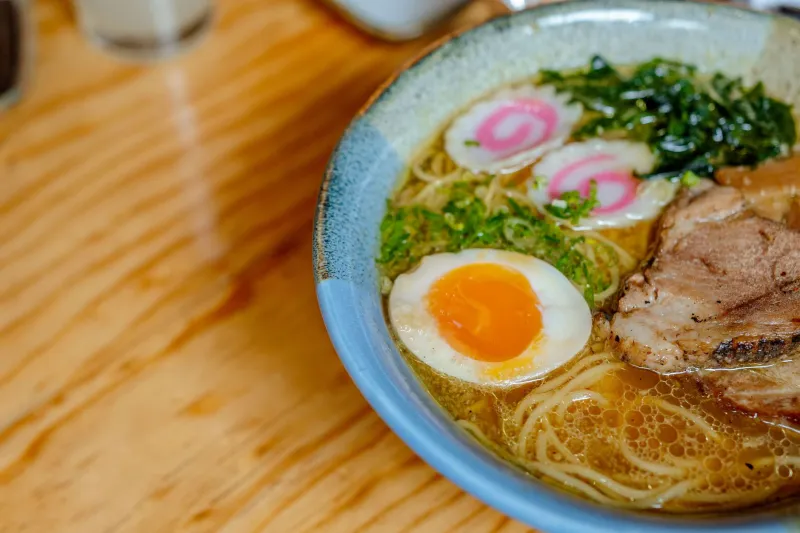
Common data points include the obvious — restaurant name, location, date, dish ordered — and the less obvious. Broth temperature at first sip. Whether the noodles held up through the full bowl or went soft by the halfway mark. The quality of the chashu fat-to-meat ratio. Whether the menma tasted house-made or jarred. Ambient details sometimes make the cut too: who you went with, what the weather was like, whether you were hungry or just curious.
Derek's six-point rating system, which he calls his "bowl calibration scale," breaks down flavor into four sub-categories — depth, balance, finish, and what he simply labels "want" (as in, how badly did you want more of it when the bowl was gone). He cross-references new entries against old ones to track his own evolving palate. "I've noticed I've gotten more sensitive to sweetness in tare over time," he says. "Two years ago I didn't even register it. Now it's one of the first things I notice."
The Accidental Archive
Here's the part that goes beyond personal obsession: these journals, taken collectively, are quietly documenting the evolution of American ramen in real time.
When Priya looks back through her earliest entries from 2020 and compares them to what she's eating now, she notices patterns that no single restaurant could reveal on its own. Regional styles bleeding into each other. Certain topping trends rising and falling. The slow mainstreaming of regional Japanese styles — hakata-style tonkotsu giving ground to lighter shio preparations in some markets, while Midwest shops are doubling down on rich, almost stew-like broths that seem to reflect local taste preferences.
"I'm basically keeping a field journal," she says. "Like a naturalist, but for noodles."
That framing isn't as precious as it sounds. Food historians have long lamented the lack of granular, ground-level documentation of how cuisines evolve in real communities. Restaurant critics cover openings and closings. Guidebooks capture snapshots. But the day-to-day drift of a cuisine — the way a broth changes across seasons, the way a chef's style matures, the way a neighborhood's ramen scene responds to its own demographics — that stuff mostly disappears. These journals are catching some of it.
Sharing the Record
Most ramen journalers keep their records private, at least initially. But communities are forming around the practice. Private Discord servers and subreddit threads have become places where enthusiasts compare documentation methods, debate rating systems, and occasionally share entries. Some have started posting lightly edited versions of their notes publicly — not as reviews, exactly, but as something closer to field reports.
The distinction matters to them. "A review is a verdict," Derek explains. "A journal entry is an observation. I'm not telling anyone whether to go to a place. I'm just recording what happened when I did."
That humility is part of what makes the practice interesting. It's not about authority. It's about curiosity, sustained over time, applied to a single subject with genuine love.
Starting Your Own Bowl Record
If this sounds appealing, the barrier to entry is basically zero. A pocket notebook and a pen are enough. Start with just three things after every bowl: what you ordered, one thing you noticed that you might not have paid attention to before, and whether you'd go back. That's it. The system will grow naturally from there, shaped by what you find yourself wanting to remember.
The bowls will start tasting different almost immediately — not because they've changed, but because you're finally paying the kind of attention they deserve.
At Menya Mugen, we've always believed that a great bowl isn't just consumed — it's experienced. The journal is just proof that the experience was worth keeping.